Modular by instinct
There is a particular pleasure in seeing a row of identical objects. A shelf of matching books. A drawer of folded white t-shirts. A grid of nine identical patc...
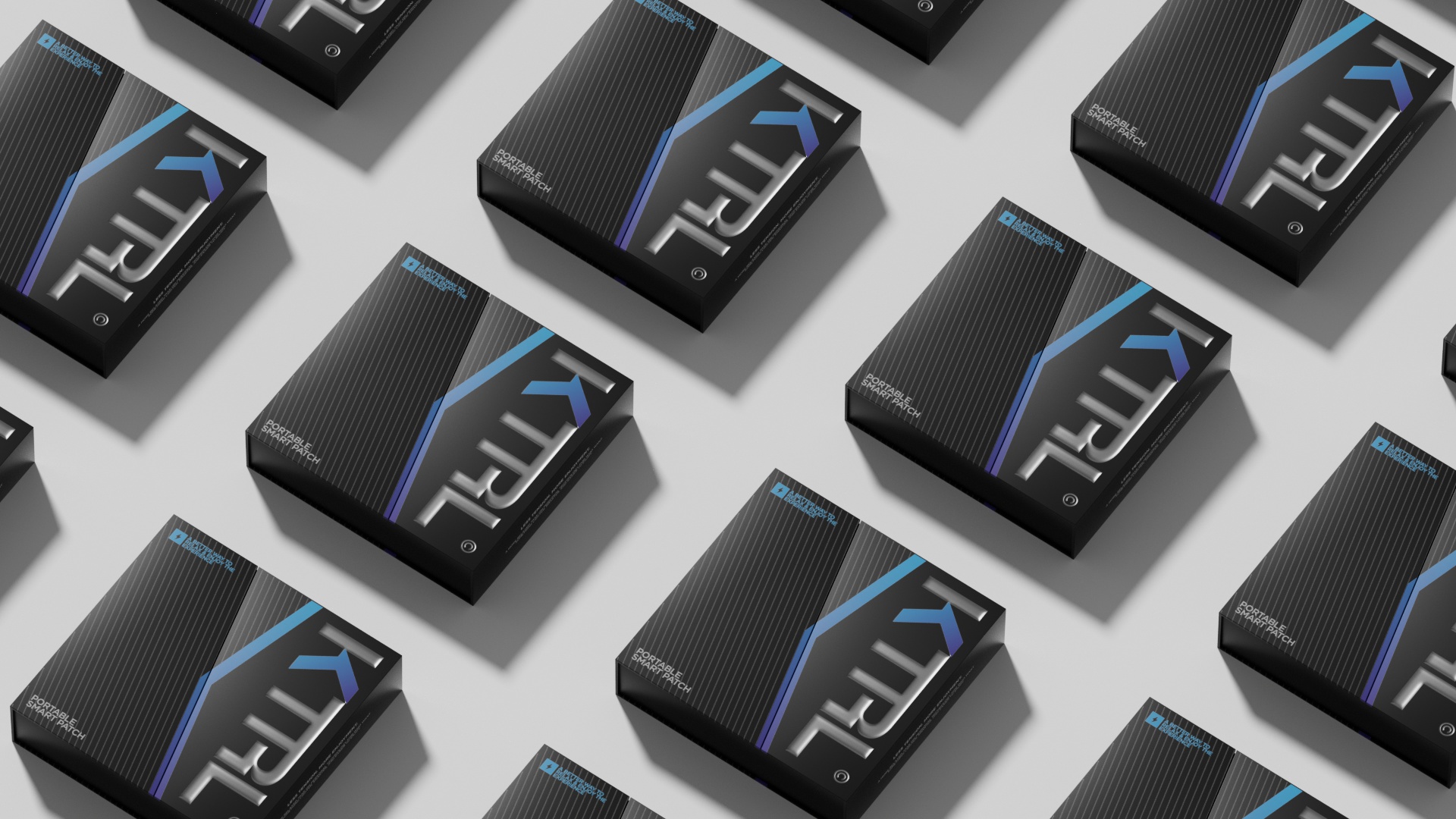
There is a particular pleasure in seeing a row of identical objects. A shelf of matching books. A drawer of folded white t-shirts. A grid of nine identical patches, arranged on a table for a photograph. The pleasure is not, as you might expect, about minimalism or order. It is about the specific freedom that comes from having made a single decision, once, and being able to live inside that decision for a long time afterward.
One unit, many configurations
The patch was designed from the beginning as a unit, not a product. A single patch sits on a nightstand. Two patches, side by side, become a small system: one for the bedroom, one for the bathroom. Three patches, distributed across a home, become a quiet network — every important surface, calmed by the same object. Nine patches, lined up in a grid for our launch photography, became a kind of accidental art installation.
None of these configurations required us to design a separate product. The unit was always the unit. What changed was the number of them, and the relationships between them. This is the quiet power of modular design: the work of designing one good thing, done once, scales into the work of designing many systems, almost for free.
Why repetition feels like freedom
It is counterintuitive that repetition should feel freeing rather than constraining. We tend to associate freedom with variety — many options, many choices, many shapes. But choice has a cost, and the cost is mental load. Every morning that begins with a decision about which object to use, which color to wear, which mug to drink from, is a morning that begins a half-step behind.
Repetition removes those decisions. The same patch, in the same color, on every nightstand in the house, means that no decision needs to be made about which one to use. The system is the system. The mind is freed to think about other things — what to make for breakfast, what to write today, whether to take the long way to work.
Repetition removes a thousand small daily decisions, and the mind is freed to think about other things.
The aesthetic of the array
There is also an aesthetic argument for repetition, which is that an array of identical objects is almost always more beautiful than a collection of different ones. A shelf of books in different sizes and colors is a shelf. A shelf of nine identical white-spined notebooks is a composition. The eye, given uniformity, stops counting and starts feeling. The room becomes calmer because the eye has less work to do.
This is why hotels look the way they do, and why monastery cells look the way they do, and why the most calming photographs of homes are almost always photographs of homes with very few different objects in them. Repetition is a visual silence. It lets the room exhale.
Designing for the second purchase
Most product design is optimized for the first purchase. The packaging, the unboxing, the first interaction — all of it is shaped to make a stranger become a customer. We tried to optimize for the second purchase. We asked, from the beginning: what would make someone, six months after buying one patch, want to buy a second one?
The answer, we found, was not a new color or a new feature. The answer was the same patch, again, for a different room. The system extended itself by repetition. The second purchase felt less like a new transaction and more like a small expansion of a decision that had already been made. Modular by instinct, in other words, means designing for the long, quiet relationship — not for the loud first encounter.
Comments (0)
Please login to comment.
No comments yet.