Designing for quiet
There is a particular hour, somewhere between the last email and the first long exhale, when an object on the table either helps or it does not. The patch began...
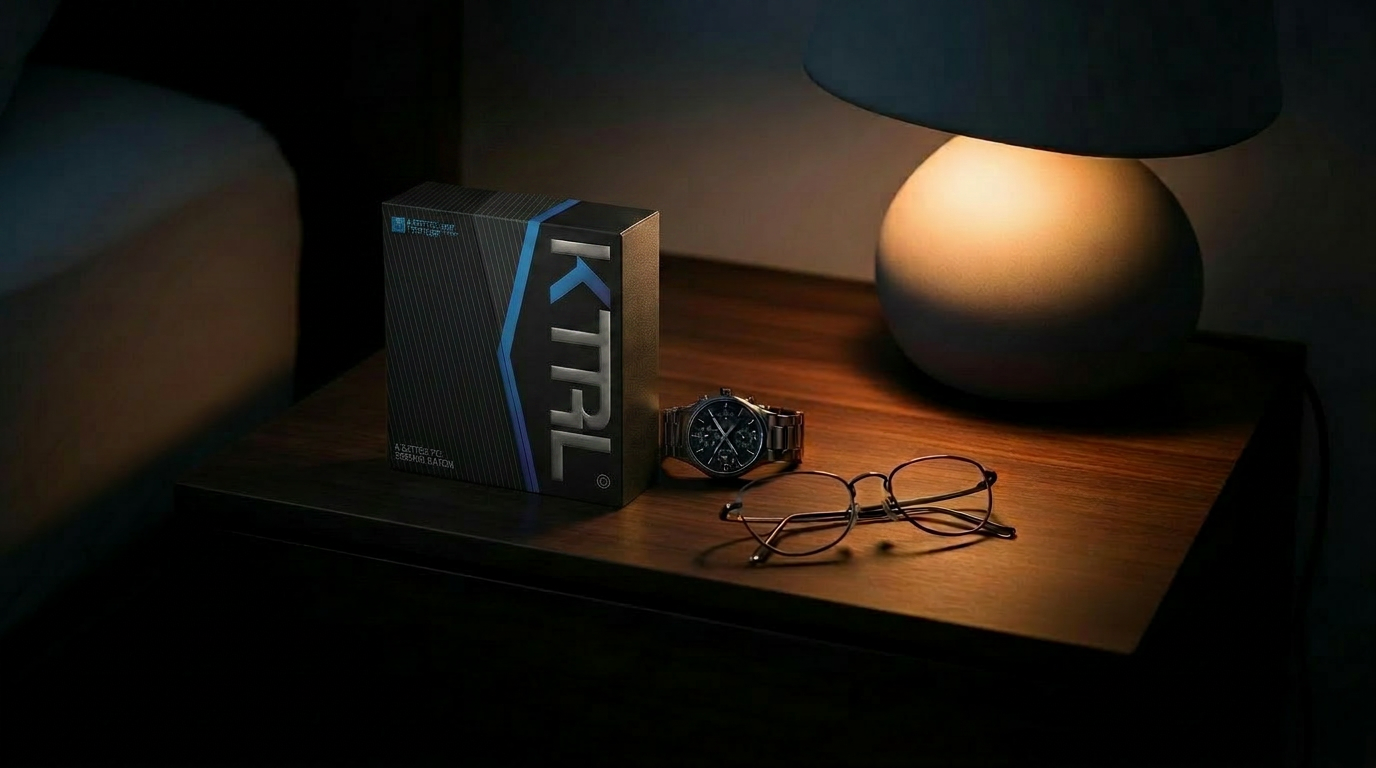
There is a particular hour, somewhere between the last email and the first long exhale, when an object on the table either helps or it does not. The patch began as a question about that hour — and about the small, almost invisible decisions that shape how a room feels at the end of a long day. We did not set out to design a gadget. We set out to design a feeling, and then to find the smallest possible object that could carry it.
For the first three months, our studio looked less like a hardware lab and more like a quiet apartment. We placed prototypes on nightstands, on bathroom counters, on the corners of writing desks, and we lived with them. We took notes when something hummed at the wrong frequency. We took notes when a status light woke us at three in the morning. We took notes when a guest, visiting for the weekend, asked what an object was for and we struggled to give a single-sentence answer. Each note removed something.
Subtraction as a discipline
It is easy to add. Adding is the default mode of most product teams: another sensor, another color option, another mode hidden three menus deep. Subtraction is harder, because every removal must be justified, and because the absence of a feature rarely shows up in a screenshot. We made subtraction a weekly ritual. Every Friday afternoon, the team sat together and asked one question: what can leave? Sometimes the answer was a button. Sometimes it was a sound. Once, memorably, it was an entire mode of operation that none of us could remember why we had built.
By the end of the second quarter, the patch had no screen, no speaker, and no app-required setup. What remained was a single soft indicator, a coated linen surface, and a small magnet that lets the object rest, almost weightlessly, against a metal edge. This was not minimalism for its own sake. It was the residue of a hundred small subtractions, each one defended in front of the team.
An object that does nothing is not calm — it is simply absent. The work was finding the line where presence becomes useful without becoming loud.
Materials that age into the room
Restraint changed the way we thought about materials. Plastic, for all its versatility, has a tendency to announce itself: it reflects fluorescent light at unfortunate angles, it accumulates micro-scratches that read as wear rather than patina, it feels temporary in the hand. We moved to anodized aluminum for the structural shell, coated linen for the surface that meets the skin, and a single soft-touch polymer for the underside that meets the table.
Each material was chosen for how it ages. Coated linen develops a faint, even softness over months of handling — not damage, but evidence of a relationship. Anodized aluminum holds its color through years of light exposure. The polymer underside is matte enough that it does not catch the lamp on your desk. Together, they let the object settle into a room rather than sit on top of it.
The geometry of a quiet hour
We spent an unreasonable amount of time on the radius of the corners. Two millimeters felt sharp; four millimeters felt apologetic; three millimeters, in the end, was the radius that disappeared. The body of the patch is a flattened oval, slightly longer on one axis than the other, so it always finds an orientation when you set it down without having to think. The weight, around forty grams, is heavy enough to feel intentional and light enough to forget.
These are tiny decisions. Most of them will never be noticed by the person who lives with the object. That is the point. The work of design, when it goes well, is invisible — not because nothing was done, but because everything was done in service of a hour that already belonged to the person, before we ever showed up.
What we kept
In the end, three things survived every round of subtraction. A surface that is pleasant to touch. A weight that feels considered. A single indicator that fades, slowly, when the room dims. Everything else is gone, and the room is quieter for it. If there is one thing we hope you take from this entry, it is permission. Permission to remove a thing from your nightstand. Permission to leave a surface empty. Permission to let the room be quiet, and to trust that quiet is enough.
Comentarios (0)
Inicia sesión para comentar.
Aún no hay comentarios.